What if the greatest inscription at Mamallapuram names the builders rather than the king?
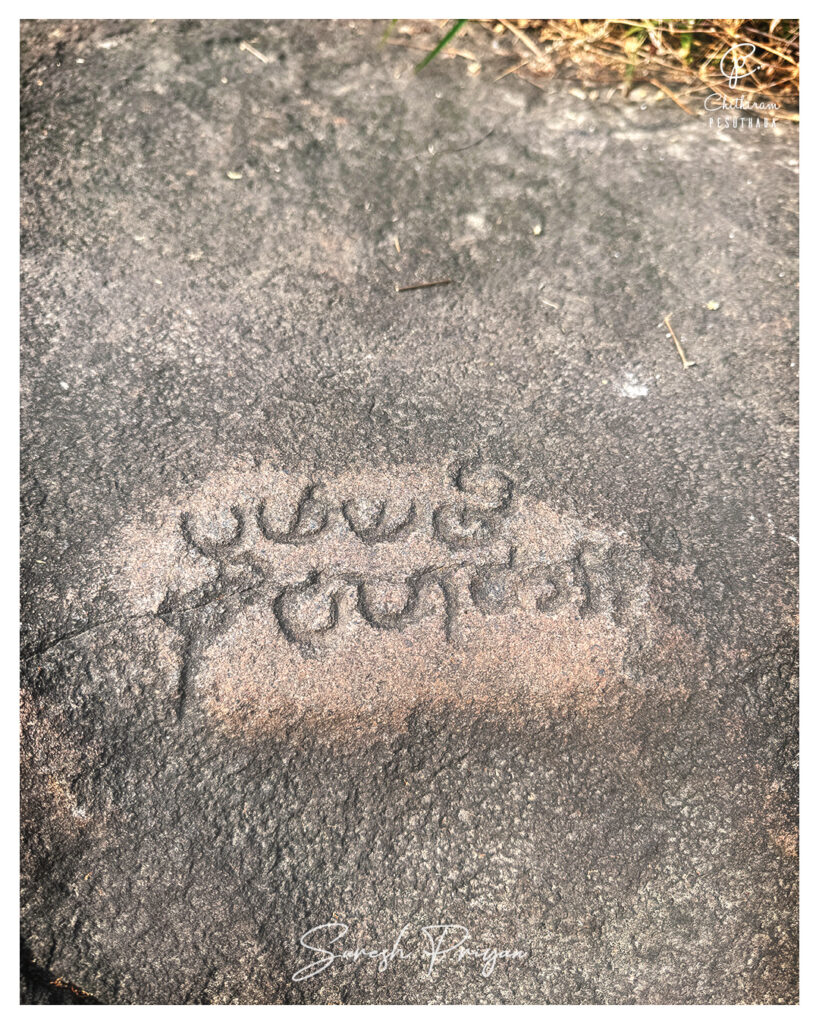
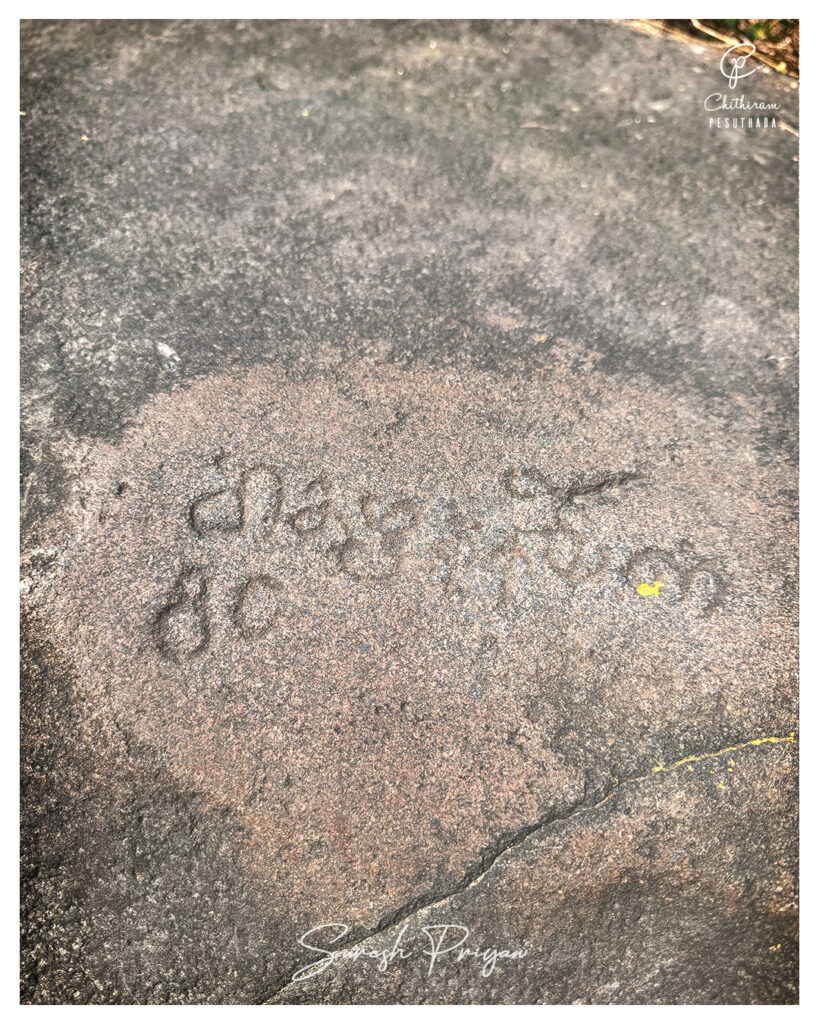
Nestled just south of Mamallapuram (Mahabalipuram), the Poonjeri inscriptions are a rare 7th–8th century record that names the actual craftsmen behind the Pallava temples. Unlike typical temple engravings that glorify kings, these weathered rock carvings list Pallava-era sculptors and artisans (e.g. Kevada Peruntachan, Kollan Semagan). Carved in archaic Tamil and Grantha script, they hint at Poonjeri as a former workshop community for Mamallapuram’s monuments. Today the site lies unprotected by ASI and is overgrown, but its inscriptions provide a unique window into India’s temple-building past.
📍 Getting There
- Where: Poonjeri village, Chengalpattu District, Tamil Nadu. (East of Poonjeri, near the coast.)
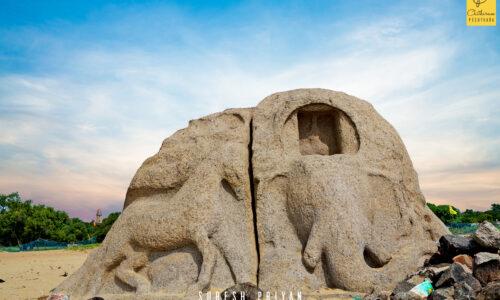
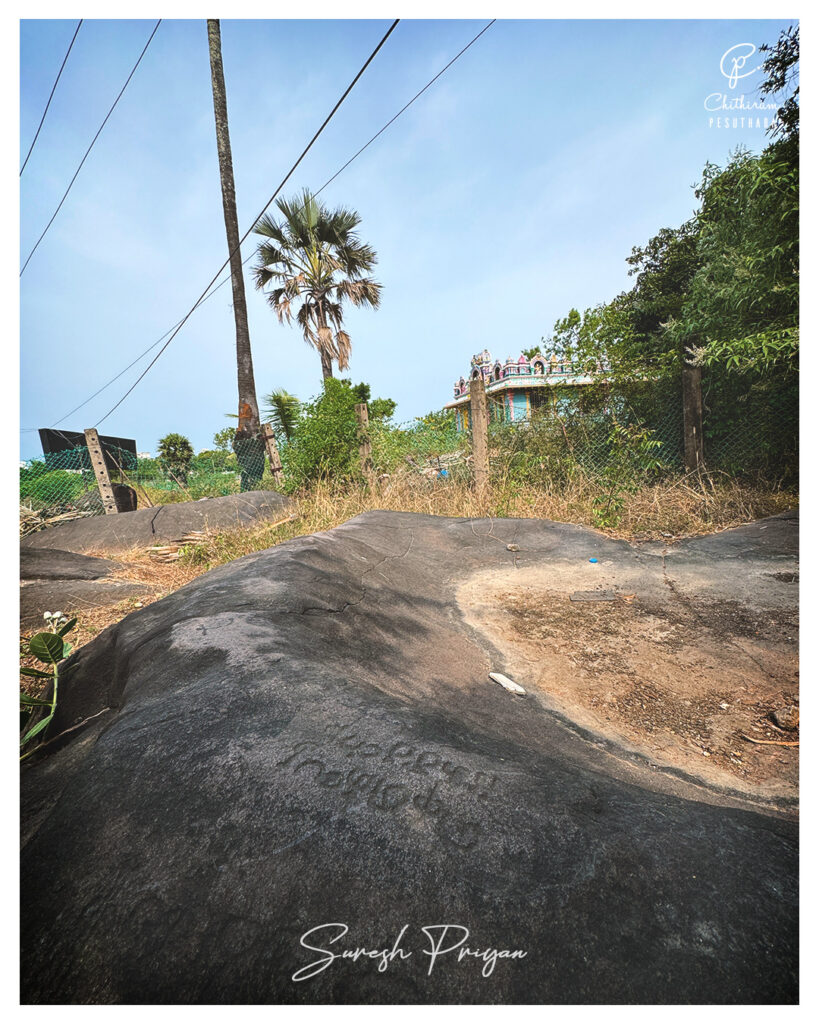
- Context: The inscriptions are on boulders in a rock outcrop east of the village (locally called Nondi Virappan Kudirai Thotti).
- Landmarks: Only ~2.9 km south of Mamallapuram’s Shore Temple, 17 km from Tirukazhukundram, 31 km from Chengalpattu, and ~57 km from Chennai.
- Access: Reachable via the East Coast Road (ECR) highway. The nearest railway station is Chengalpattu. There are no formal signboards – the site is essentially an unmarked roadside ruin. (Permissions: Presumed open; check local guidance.)
Historical & Architectural Highlights
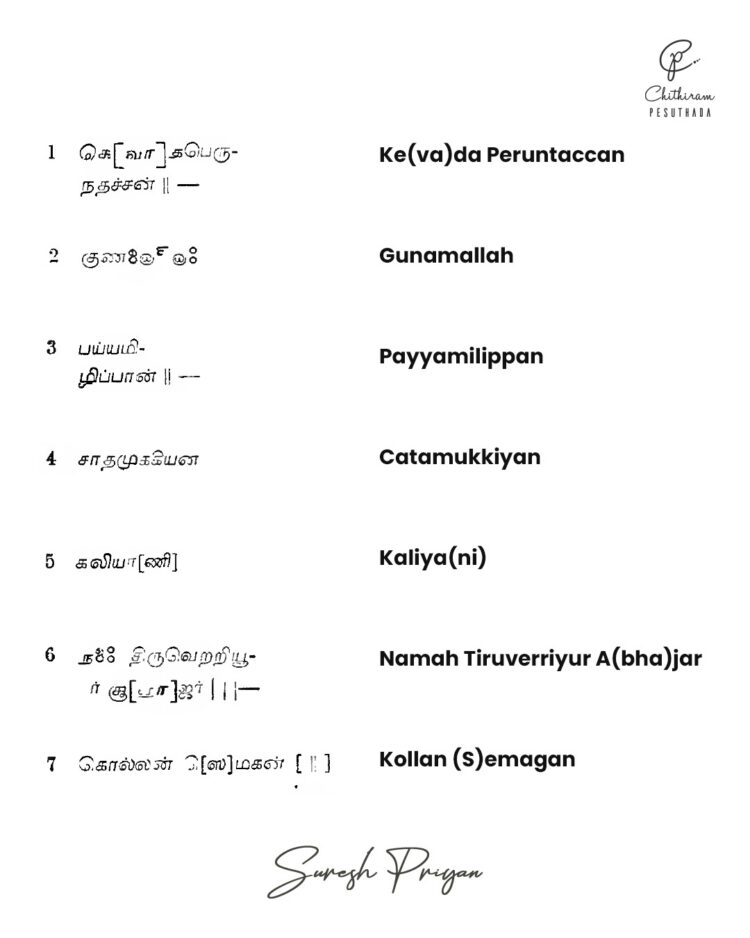
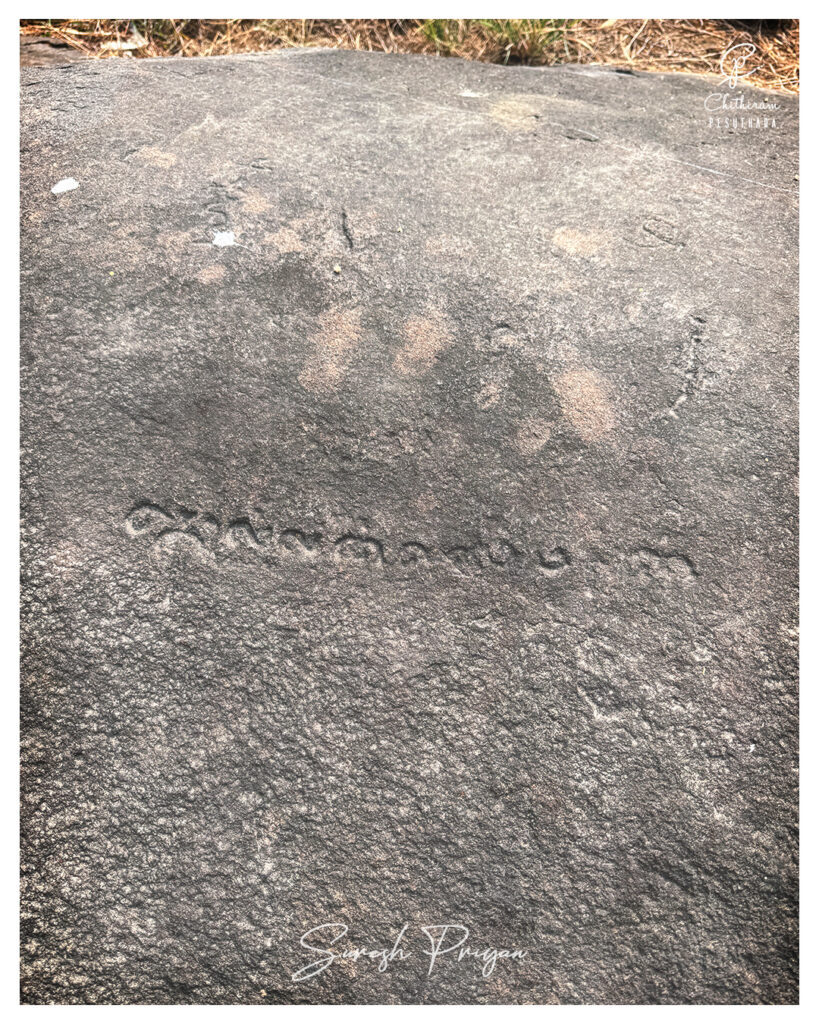
- Artisan Names, Not Kings: These 7 rock “labels” list only the names of sculptors and craftsmen. For example, “Kevada Peruntachan” (கேவாத பெருந்தச்சன்) literally means Chief Sculptor Kevada, and “Kollan Semagan” identifies Semagan the iron-worker. Finding artisans’ names on a temple site is extremely rare.
- Pallava Workshops: All names are associated with the artisan class (taccan = sculptor), implying these individuals led or worked in the Mamallapuram carving workshops. Historians believe the chief architects likely lived in Poonjeri while building Mamallapuram’s monuments.
- Script & Date: The labels are engraved in archaic Tamil script with some Grantha characters. Paleographically, they date to the late 7th–early 8th century CE, possibly to Paramesvaravarman I’s reign (around 670–700 CE).
- Palaeographic Interest: Scholars include these labels in epigraphic corpora because of their archaic script. They complement the other 7th-century Mamallapuram records. (Notably, the shore temples themselves bear no inscriptions identifying their carvers.)
- Unique Firsts: This is the first known Tamil Nadu inscription explicitly naming architects. It offers unprecedented insight into who built the famous Pallava rock-cut temples and rathas.
- Site Condition: The stones lie largely uncontrolled by ASI. Road widening has brought the modern highway dangerously close, and heavy vegetation now hides the inscriptions. Conservationists warn the carvings could easily be lost without intervention.
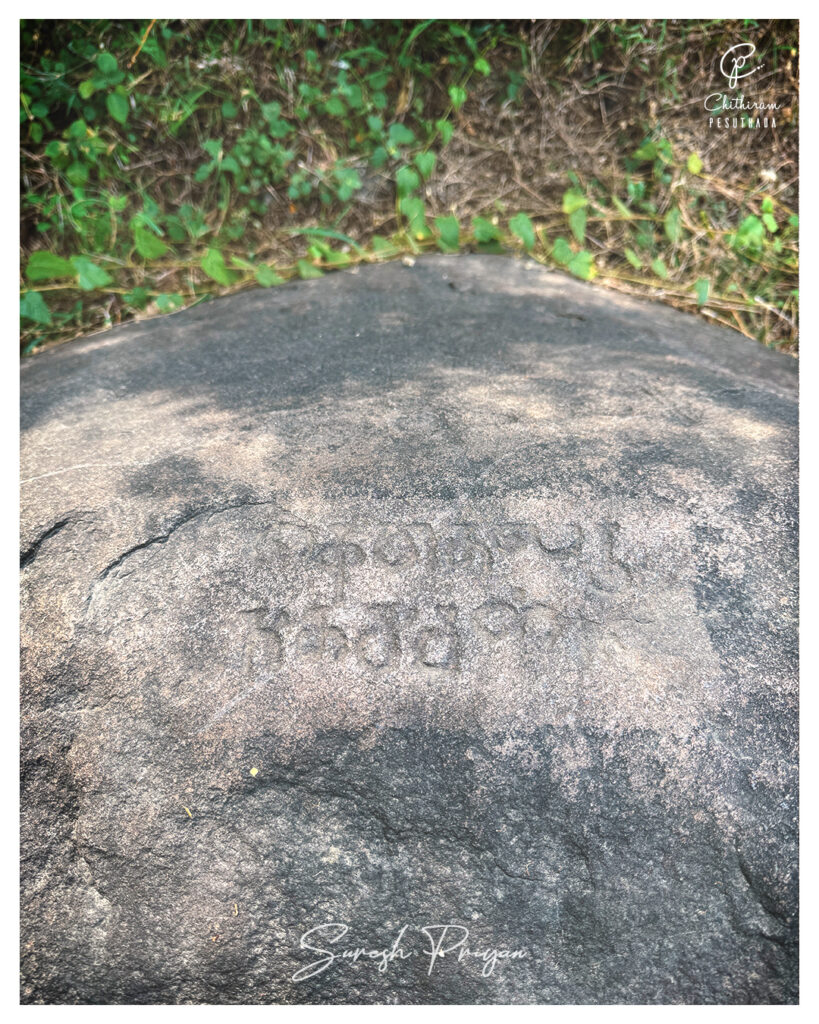
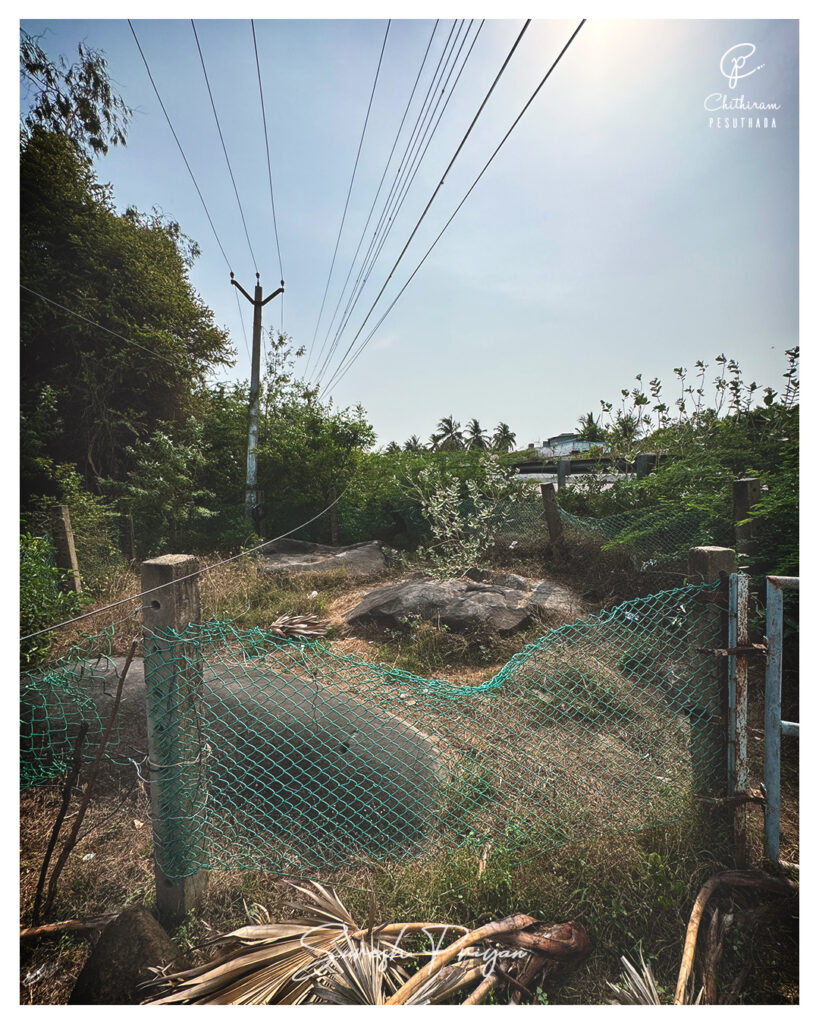
Inscriptions Table
| # | Transliteration | Script | Meaning/Role | Artisan Class |
|---|---|---|---|---|
| 1 | Kevada Peruntachan | Tamil & Grantha | Peruntachan = “chief sculptor” | Sculptor |
| 2 | Gunamallan | Tamil & Grantha | (name of a person) | Sculptor |
| 3 | Payyamilippan | Tamil & Grantha | (name of a person) | Sculptor |
| 4 | Catamukkiyan | Tamil & Grantha | (name of a person) | Sculptor |
| 5 | Kaliyani | Tamil & Grantha | (name of a person) | Sculptor |
| 6 | Namo Tiruvorriyur Abhajar | Tamil & Grantha | Honorific Namo + name (from Tiruvorriyur) | Likely sculptor |
| 7 | Kollan Semagan | Tamil & Grantha | Kollan = iron-worker; Semagan (name) | Metal-worker |
Table: Summary of the seven inscribed labels (South Indian Inscriptions, Vol. XII, AR 1932–33). All names appear on a group of rocks east of Poonjeri; the script is archaic Tamil with Grantha. “Tachan” means “sculptor,” so “Peruntachan” signifies a chief sculptor. Kollan Semagan shows the presence of a smith (kollan).
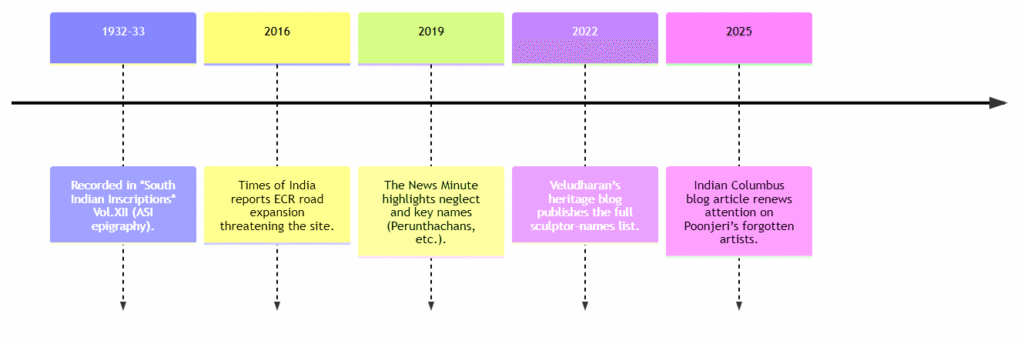
Poonjeri Inscriptions – Key Milestones
Share your thoughts!
Have you visited Mamallapuram or Poonjeri? What surprised you about these sculptor-names in stone? Comment below and let’s explore this hidden heritage together. 😊
References
- South Indian Inscriptions, Vol. XII (1932–33), “Poonjeri, Chengalpattu” (SII 12-23A).
- Veludharan’s Temple Blog, “The Mahabalipuram Sculptors’ Name Inscriptions, Nondi Veerappan Thotti, Poonjeri” (2022).
- Times of India, “ECR widening threatens ancient Poonjeri inscriptions near Mahabs” (M.T. Saju, Apr 25 2016).
- The News Minute, “Rare Poonjeri inscriptions on Chennai’s ECR lie neglected” (A. Shekar, Apr 30 2019).
- Indian Columbus Heritage Blog, “Poonjeri Inscriptions: A Forgotten Tribute to Pallava Sculptors” (Feb 25 2025).
YouTube: https://www.youtube.com/c/chithirampesuthada
Facebook: https://www.facebook.com/chithirampesuthadasuresh/
Instagram: https://www.instagram.com/chithirampesuthada/
Flickr: https://www.flickr.com/photos/chithirampesuthada/
Web: https://chithirampesuthada.com/